 Base
Base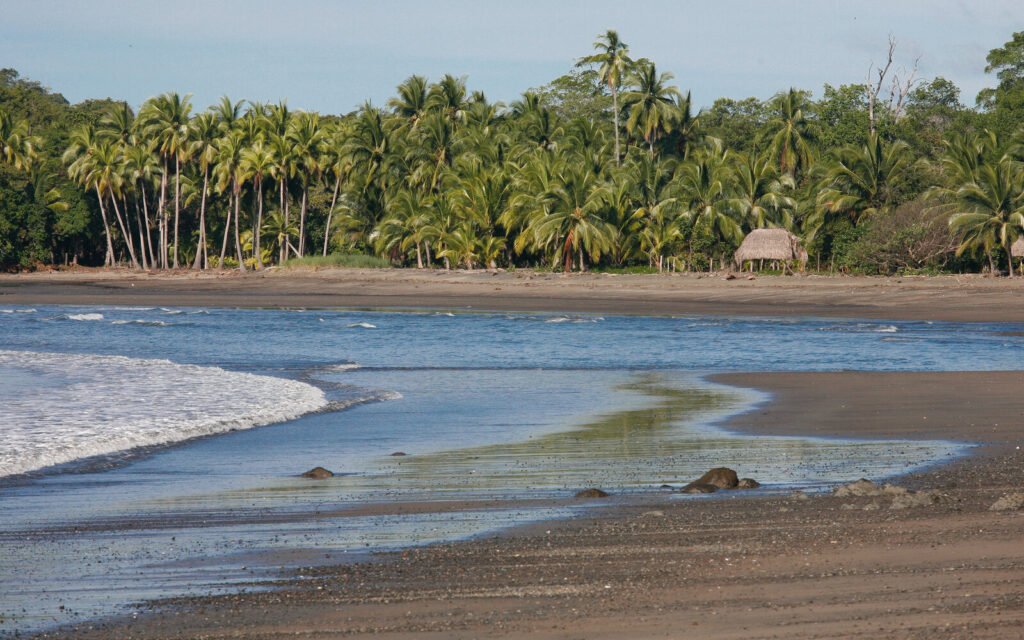
Last verified: August 20, 2026.
Santa Catalina is a fishing village of fewer than a thousand people on the Veraguas coast with two superpowers: one of Central America’s best right-hand point breaks, and the gateway to Coiba, the marine national park UNESCO listed as a World Heritage site. This guide covers both — surf and diving — plus the raw logistics nobody mentions: the ATM that fails, the last bus at 5 p.m., and the park fee you pay in cash.
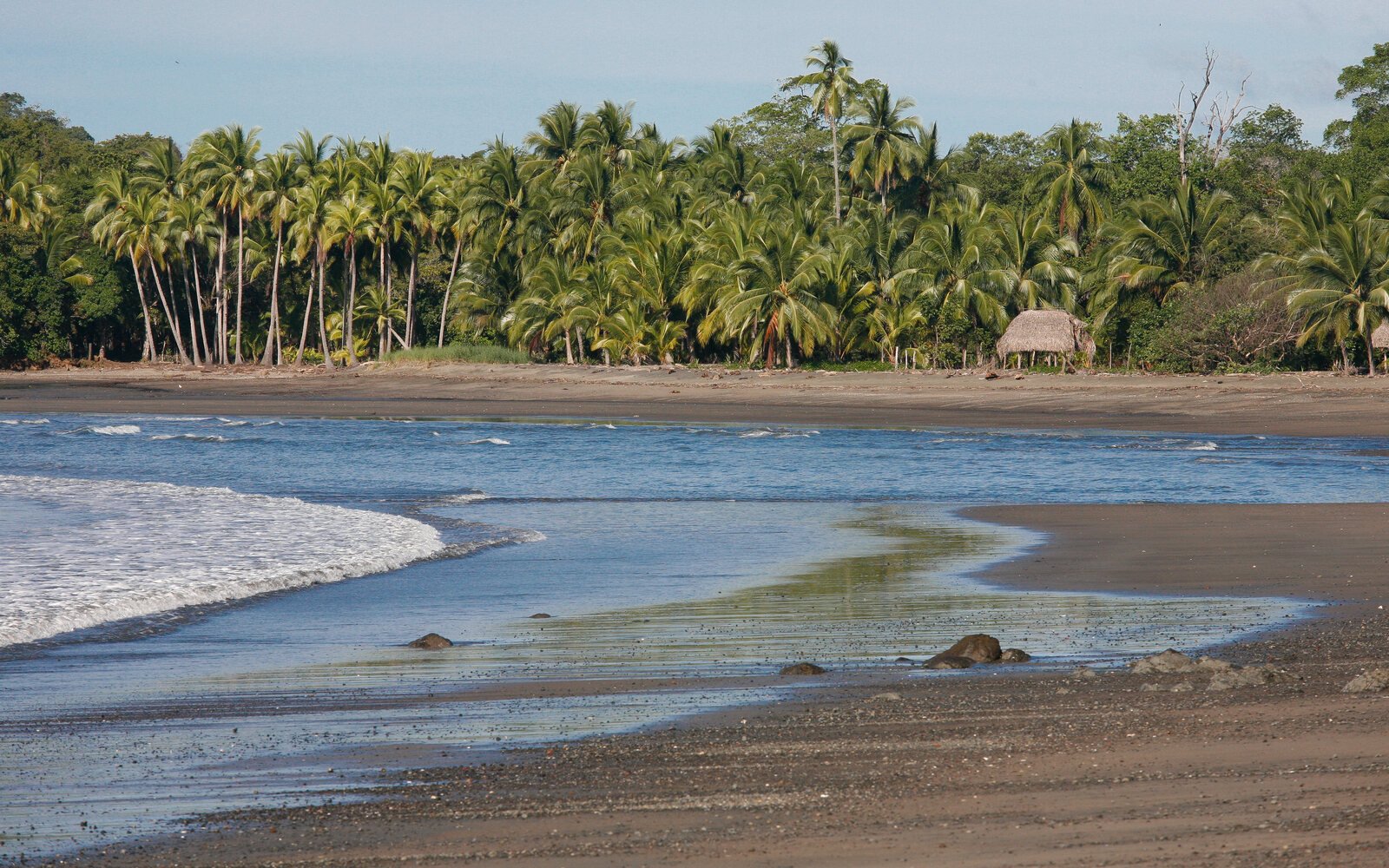
When to go: the central dilemma
- Dry season (Jan-May): calmer seas, better dive visibility, and whale shark season. January is the busiest month.
- Green season (Jun-Nov): the big surf swell (peaking May-Oct) and humpback whales July through October. July-August is the sweet spot: reliable waves, manageable rain, humpbacks in the water.
- Avoid September-October: peak rain, worse roads, and Coiba trips at the weather’s mercy.
The surf, break by break
| Break | Level | What it is |
|---|---|---|
| La Punta | Upper-intermediate+ | The jewel: a long right over volcanic reef with hollow sections — best at low tide (at high tide the shallow reef taxes your board) |
| Playa Estero | Beginner | Sand-bottom beach break, A-frames, works on every tide — the lesson spot |
| Punta Roca / Punta Brava | Intermediate+ | Shallow-reef lefts, few people — Brava only within an hour of low tide |
Bench prices: board rental US$ 10-15 per half day (Fluid Adventures, Rancho Estero) up to US$ 20-25/day; lessons from US$ 45/hour with board, leash and video (Waluaa). Village credential: Santa Catalina hosted a stage of the 2023 Pan American Surfing Games.
Coiba: the prize across the channel
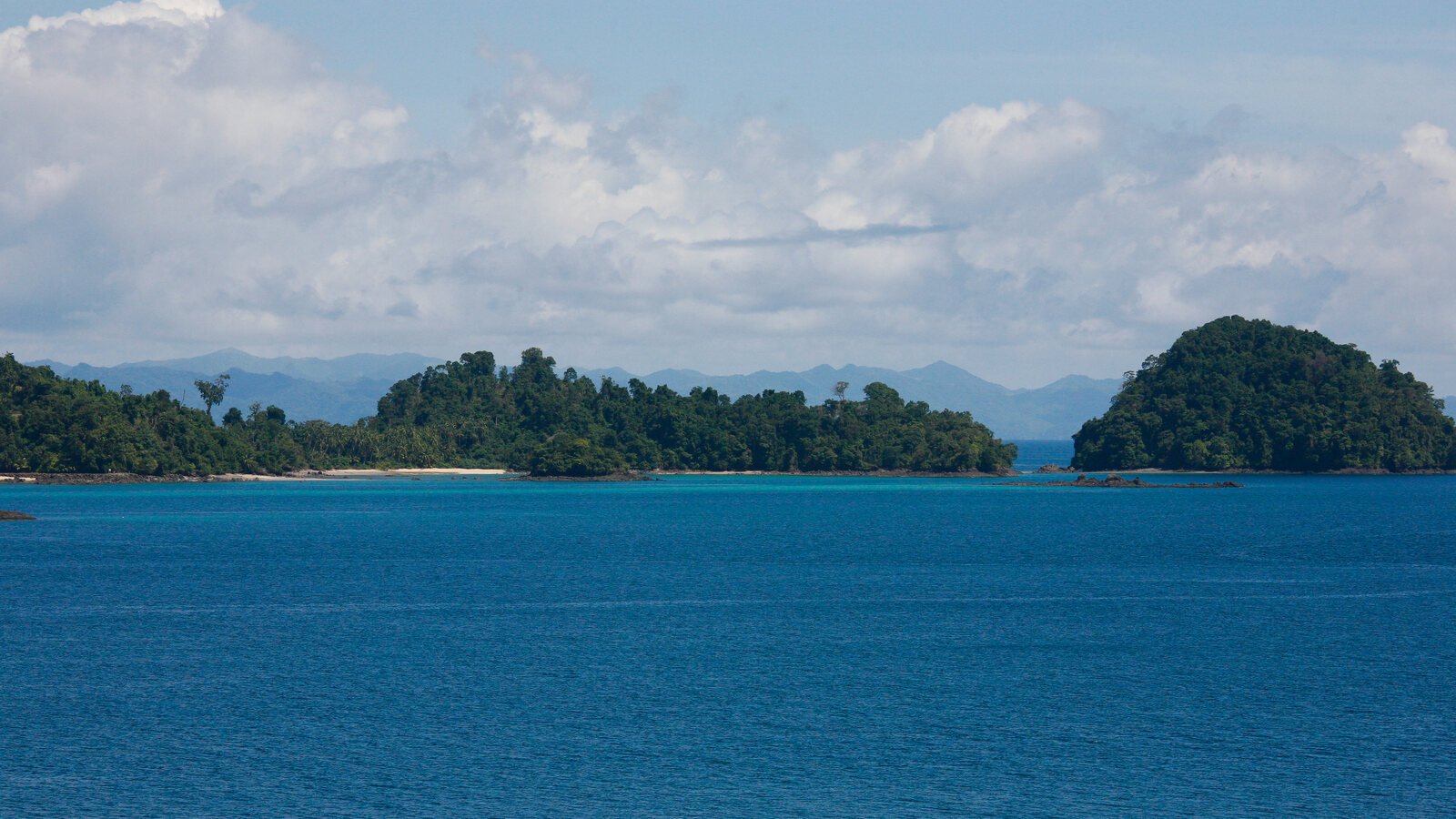
Coiba National Park — Central America’s largest island plus 38 islets, UNESCO-listed since 2005 — holds 760+ fish species, 33 shark species and 20 cetaceans, in waters sheltered from cold currents and El Niño. The historical twist: the island was a penal colony from 1919 to 2004, which is exactly why its forest is intact. Current management: the Ministry of Environment (MiAmbiente).
- Park fee: US$ 20/day for foreigners, US$ 5/day for residents (under-12s free) — cash only. The detail that matters if you live in Panama: on a 3-day trip, residency turns US$ 60 into US$ 15.
- Diving: a 2-dive day trip with gear, guide and lunch runs US$ 135-160 (Diving Coiba publishes its rate card; the market tops out around US$ 180); a discover dive in Coiba is US$ 180; full Open Water US$ 590 with park fees included. A 3-day/9-dive package with overnight: ~US$ 795 (dated report, Jan 2026).
- Snorkeling: from US$ 65 + fee (Snorkel Coiba, 8 a.m. departure from Restaurante Pingüinos); whale watching Jul-Oct from US$ 650 per boat.
- What you see (a 9-dive report from Jan 2026): whale shark, a large manta, a bull shark, whitetips stacked in caves, barracuda schools, turtles. The honest caveats: ~18 m visibility limited by plankton (which is what attracts the whale sharks), thermoclines dropping the water from 27°C to 22°C, and strong currents at some sites.
Raw logistics
- By car (recommended): ~360 km from the capital, 5-7 hours — Inter-American Highway to the Santiago area, the Soná turnoff, then the narrow final stretch to the coast. Local rules: arrive in daylight (the road carries cattle, horses and pedestrians) and fuel up before the last leg.
- By bus (~US$ 16 total): Albrook → Santiago → Soná → Santa Catalina, 7-8h with transfers. The catch: the last Soná→Santa Catalina bus leaves around 5 p.m. — to make it, leave the capital on the 10:20 a.m. bus at the latest. Miss it and you sleep in Soná. (Local schedules vary; confirm at the terminal.)
- Where to stay: hostel dorms US$ 5-12; surf camps and rooms US$ 15-40; mid-range US$ 50-100 (Bambuda, Tiki Lodge, Sol y Mar); Hotel Santa Catalina tops the village. Where to eat: Los Pibes (Argentine grill), Jammin (wood-fired pizza), Pescao, Donde Viancka’s — with village-typical irregular hours.
- Sport fishing: Santa Catalina’s trump card is access to Coiba and the legendary Hannibal Bank — full-day charters run US$ 450-1,900 per boat depending on range (Coiba Fishing, PescaYa).
The part nobody tells you
- Cash is infrastructure. The village’s only ATM (facing Abarrotería Elisa) fails and runs out of bills often — and the next one is in Soná, 1.5 hours away. Add up the Coiba fee (cash) + lodging + food and arrive stocked.
- Buy your SIM card BEFORE. Signal is weak and there’s no phone shop in the village — the mini-marts only sell top-ups. Get the chip (Tigo or Más Móvil, ~US$ 6-7 for a week of data) in Santiago or the capital.
- Cards are the exception, not the rule. Big hotels and dive shops take them (sometimes with a surcharge); the rest of the village runs on cash.
- Book dives with a deposit — operators require one (Snorkel Coiba: US$ 10.70/person), refunded only for weather cancellations.
Honest verdict
Santa Catalina is Panama unplugged: no resort, no mall, no polished asphalt — and one of the continent’s best wave-and-wildlife combos at a fair price (diving a UNESCO park for US$ 135-160 is a global rarity). It’s superb for anyone who accepts the rusticity; it frustrates anyone expecting infrastructure. Our residents’ tip: aim for the July-August window, carry your residency card (the fee drops to US$ 5) and cash in the money belt. For another dose of Panama’s interior, our Boquete guide rounds out the route; the country’s numbers live in Panama by the Numbers.