 Base
Base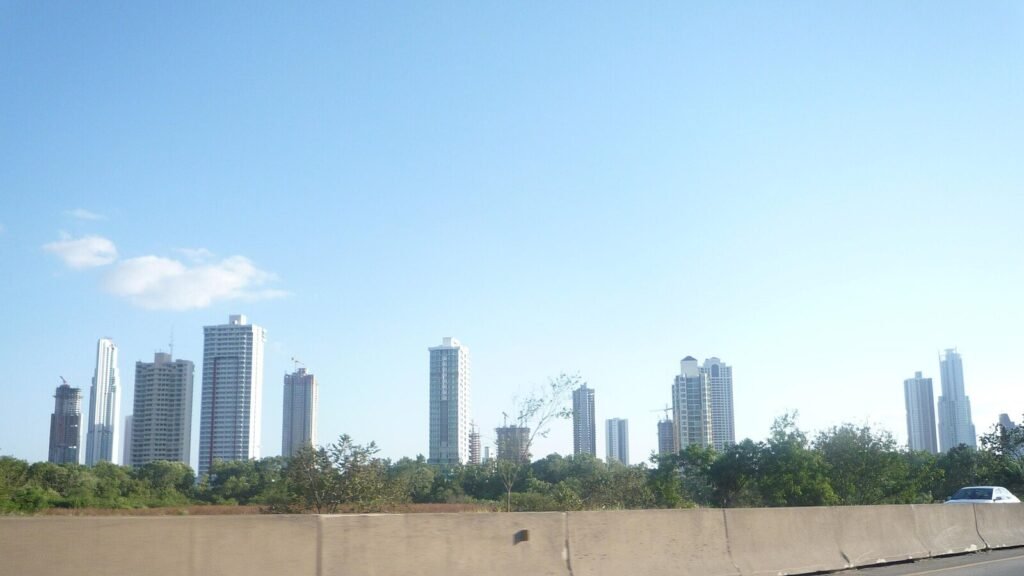
Last verified: August 18, 2026. Prices in US dollars (Panama is dollarized). Sources linked throughout.
In Part 1 of this series we covered the macro numbers: a decade of near-zero inflation, GDP, interest rates, and who lives here. Now for where the money hits the pavement: what it really costs to live, eat, get a haircut, and move around town — with the contrasts only residents know. Because Panama is a country of two prices: the same service costs double or triple depending on the zip code.
Panama compared: cheaper than the US, pricier than its neighbors
| Comparison (overall cost of living) | Result |
|---|---|
| vs United States | Panama ~35% cheaper |
| vs Miami (city × city) | Miami is ~77% more expensive (rent: +162%) |
| vs Portugal | Panama ~8% cheaper (but groceries ~10% pricier) |
| vs Costa Rica | Panama ~18% cheaper |
| vs Mexico | Panama ~5% pricier |
| vs Colombia | Panama ~31% pricier (rent: ~+89%) |
| vs Brazil | Panama ~39% pricier (rent: +146%) |
Source: Numbeo indexes (Aug 2026, crowdsourced — treat as orders of magnitude). Budget reference: a family of four spends ~US$2,978/month before rent; a single person, ~US$821.
The practical translation: arrive from the US or Europe and Panama feels affordable. Arrive from Colombia or Brazil and the rent stings — that’s where nearly all the difference lives. Groceries are expensive by Latin standards (almost everything is imported); anything involving local labor is cheap. That’s the ruler for the whole country.
Neighborhood by neighborhood: where the prices live
| Neighborhood / area | Profile | Typical rent (2BR, US$/mo) |
|---|---|---|
| Costa del Este | Master-planned corporate district, international schools — the “Panamanian Miami” | 2,200–3,800 |
| Punta Pacífica | Luxury towers on the water, Johns Hopkins-affiliated hospital | 2,200–3,500 |
| Santa María | Gated golf community, the absolute top of the market | 3,000+ |
| Casco Antiguo | Gentrified UNESCO old town, the most contested square meter | 2,500–4,200 |
| San Francisco | The “cool” district: restaurants, Parque Omar — best premium value | 1,500–2,500 |
| El Cangrejo / Obarrio / Bella Vista | Urban core, favorite of mid-budget expats | 1,000–1,800 (studios from ~550) |
| Panamá Pacífico | Planned city on the former Howard AFB, special economic zone — where we live | 1,300–2,500 |
| Brisas del Golf / Condado del Rey | Solid local middle class | 800–1,500 |
| Coronado (beach, ~1h15) | Established expat retiree beach hub | 600–1,800 |
Sources: asking prices on listing portals (Encuentra24, InmoPanama) and 2025-26 relocation guides; citywide median sale price ~US$2,208/m², premium new builds at 3,400–4,200/m². More on Costa del Este in our neighborhood guide.
And the areas you avoid
Context first, because it matters: Panama closed 2025 with a homicide rate of ~12 per 100,000 — the lowest in its neighborhood (Costa Rica: 16.6; Colombia: ~25; Ecuador: 38.8) and roughly a third of a typical US Deep South metro. But violence here is hyperlocal: it lives at specific addresses, nearly all of them off any newcomer’s path.
- San Miguelito (the district bordering the capital): 17% of the country’s homicides in 2025 — the critical sectors are Belisario Frías, Belisario Porras, and Arnulfo Arias.
- The old-center ring: El Chorrillo, Curundú, parts of Santa Ana, and Calidonia — right next to the touristy Casco, with gang-controlled blocks.
- The capital’s east side: pockets of Pedregal, Tocumen, and 24 de Diciembre (the airport road is safe; the inner neighborhoods are not).
The corridor where foreigners actually live — Costa del Este, San Francisco, Punta Pacífica, Obarrio, Panamá Pacífico — runs on developed-country security standards. Our practical rule: the city is safe by default; the addresses above, you simply have no reason to visit.
Services: the country of two prices
Here’s where our own experience comes in. On the Boulevard in Panamá Pacífico, where we live, a men’s haircut costs US$18. At a mall salon in the city, under US$7. Same service, same scissors — different zip code. That logic repeats across the country:
| Service | Real range (2025-26) |
|---|---|
| Men’s haircut | US$7–20 depending on the neighborhood |
| Housekeeper (monthly) | legal minimum US$350; market rate ~US$500; single day 20–35 |
| Electricity (apartment, moderate A/C) | US$90–200; large house with heavy A/C: 250+ |
| Water | US$10–25 (many pay under 10) |
| Cooking gas (subsidized tank) | ~US$5–6 (lasts 1.5–2 months) |
| Home internet (60+ Mbps) | ~US$40–60 |
| Mobile plan (10+ GB) | ~US$20–50 |
| Gym | US$30–70/month |
| Movie ticket | US$7–16 |
| Private doctor visit | GP 30–60; specialist 50–100 |
| Health insurance (adult ~40) | US$80–200/month; family 300–600 |
| Private school | from US$410/year (basic) to 9,000–15,000/year (international); mid-tier schools ~US$224–320/month |
Sources: 2026 minimum wage (La Prensa); ACODECO (monitoring of 140 private schools); Numbeo Aug 2026; SURA/Alianza insurers.
Notice the pattern: anything made of local labor is cheap (the capital’s median salary is US$776); anything imported or “international” is expensive. Schools are the extreme example: there’s a US$410-a-year school and a US$15,000-a-year school in the same city.
Food: from US$4 to US$80 in the same week
Another contrast we live daily. Along the Pan-American Highway and in local neighborhoods, the typical-food fondas serve a lot and charge little: a plate of the day for US$3.50–6. A business lunch in a commercial district runs US$10–15. But at an international restaurant in the city — Italian, Japanese, a steakhouse — we rarely walk out under US$80 for two adults and a child. A three-course dinner for two at a mid-range spot runs about US$45.
- Groceries: a couple spends US$350–550/month; a single person, 200–350. Milk US$1.87/L, eggs US$2.65/dozen, chicken US$2.85/lb. Wholesale clubs make a difference — we tested PriceSmart and published the receipt.
- Markets: at Merca Panamá (the wholesale food market), produce runs about half of retail.
- Local beer: US$1.33 at the supermarket, ~US$3 at a bar. Cappuccino: ~US$4.
Public transit: the fare that hasn’t moved in 12 years
This may be the single most striking fact in Panama’s cost of living. The Metro has cost US$0.35 since it opened in 2014 (Decree 367/2014) — twelve years without a single cent of increase. Line 2 has cost US$0.50 since 2019, also frozen. The Metrobús charges US$0.25 on trunk routes — and the express-corridor fare actually dropped from US$1.25 to US$0.75 in 2017. How? Heavy subsidy: riders pay only 34% of the bus’s real cost (which would be US$0.80–1.74); the state covers the rest. President Mulino has warned the metro fare “will be reviewed” — but in March 2026 the government confirmed that, for now, nothing goes up. Taxis work by zones (US$2–8 for city rides; airport–downtown US$30–50) and Uber runs normally (~US$4–7 for a typical ride).
Fuel: the decade the pump danced (while the fare didn’t)
| Year | 95-octane gasoline — US$/gallon (US$/liter) | Diesel — US$/gallon (US$/liter) |
|---|---|---|
| 2016 | 2.60 (0.69/L) | 2.07 (0.55/L) |
| 2018 | 3.20 (0.85/L) | 2.88 (0.76/L) |
| 2020 | 2.43 (0.64/L) — pandemic low: 1.78 (0.47/L) | 2.06 (0.54/L) |
| 2022 | 4.41 (1.17/L) — spot peak in June: 6.02 (1.59/L) | 4.34 (1.15/L) |
| 2024 | 3.75 (0.99/L) | 3.29 (0.87/L) |
| 2025 | 3.45 (0.91/L) | 3.11 (0.82/L) |
| Aug 2026 | 4.82 (1.27/L) | ~5.00 (~1.32/L) |
Source: official monthly series from the Comptroller General (annual averages computed by us); current fortnight from the National Energy Secretariat. Prices are set every 15 days. Pumps here sell by the gallon: 1 gallon = 3.785 liters.
The story behind the table: when gasoline hit US$6/gallon in June 2022, the country stopped — literally. Protests shut down the Pan-American Highway for weeks, and the government froze fuel at US$3.25/gallon, a subsidy that lasted until January 2024 and cost over US$500 million. Today prices float (set fortnightly), but since April 2026 a targeted subsidy lets public transit, school buses, and artisanal fishing fill up at ~US$3.33–3.41/gallon. The moral: in the capital you can get around for pennies; outside it, a car is the norm — and fuel is the most volatile line in a Panamanian budget, in a country where almost nothing else moves in price.
Extras nobody adds up (but should)
- Property tax: your primary residence is exempt up to US$120k of registered value (Law 66/2017); from 120k to 700k you pay just 0.5% a year. A first new home up to US$300k gets 3 extra years fully exempt.
- Cars: a new Corolla runs ~US$20.5–21k. Importing a used car from the US is common; shipping starts around ~US$850.
- Local salaries (if you’ll be hiring): minimum wage is set by activity — domestic workers US$350/month in the capital; the capital’s overall median is US$776; a senior professional ~US$1,100.
The part nobody tells you
- Rent is the heaviest line item for Latin arrivals (+89% vs Colombia, +146% vs Brazil) — and the bargain for Americans (Miami rents are 2.6× higher). Same market, opposite experience.
- The supermarket takes strategy. A middle-income country with European shelf prices (10% above Portugal): nearly everything crosses an ocean in a container. Cook local food and shop the markets and you’ll live on a fraction of what the imported-cart lifestyle costs.
- Indexes are averages — and here the average lies. Numbeo says “haircut: US$12.” We pay 18 on the Boulevard and 7 at the mall. Both are right; the average doesn’t exist in real life. Use the ranges, not the middle number.
The honest verdict
So is Panama expensive or cheap? Both — and the choice is yours, zip code by zip code. On a dollar or euro income, you live here at first-world standards for 35% less than in the US. Coming from Colombia or Brazil, the math only works if you pick your neighborhood wisely, eat what the country produces, and resist the fully imported lifestyle. The reward for getting the math right is in Part 1: a decade of zero inflation means the budget you build today will still hold in five years — try saying that about any other country in the region.
Cover photo: 123Hollic, Wikimedia Commons (CC BY-SA 4.0).